
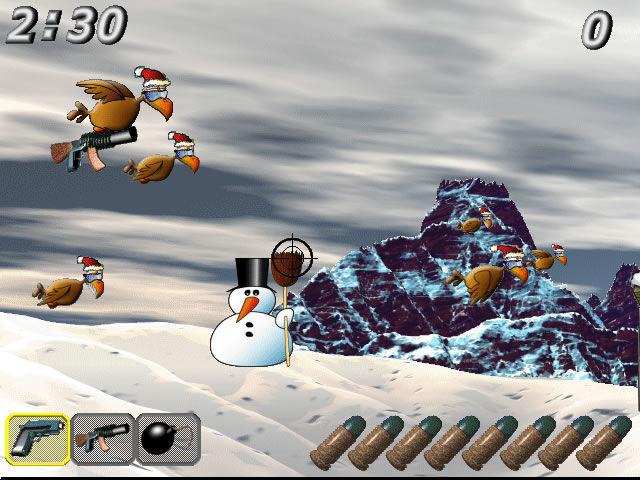

UK gaming analysts have performed a detailed examination at the well-known online casino bonus, Chicken Shoot Game. Their work centers on how the game’s wins are spread, revealing clear patterns in its variance. This unbiased study analyzes the game’s mechanics, moving past player stories to explore the mathematics behind win frequency and payout sizes. For players, grasping these patterns is key to forming their approach and setting realistic expectations for this particular bonus round.
Explaining Variance in Online Casino Characteristics
Variance, or volatility, is a statistical notion. It quantifies how spread out a game’s results are over time. This spread establishes the risk. A low-variance game distributes smaller wins more often, leading to a smoother gameplay. Chicken Shoot Game typically falls into the high-variance class. These games award wins less frequently, but the payouts can be much larger when they occur. This basic idea shapes how players manage their money and choose how long to play, especially on the feature-packed sites common in the UK.
This metric clarifies why two people can walk away from the same game with completely different experiences. One player might collect a handful of small prizes quickly. Another might endure a quiet stretch before landing one big payout. The UK study set out to chart these exact patterns within Chicken Shoot Game. The team ran thousands of simulated rounds to spot reliable trends, swapping subjective opinion for hard numbers.
The role of Random Number Generators (RNG)
A verified Random Number Generator (RNG) produces these variance patterns. The UK analysis highlighted that the observed clusters and dry spells do not create a predictable cycle. They are a direct outcome of genuine randomness. Operators licensed by the UKGC are required to use independently audited RNGs. This assures every shot in Chicken Shoot Game is a distinct isolated event. The last result has no influence the next one, a crucial truth for players to grasp.
People often imagine they see patterns where none exist. The review discovered no proof of predetermined sequences. The game’s variance is embedded in its probability table, the hidden set of odds for each prize. The RNG chooses fairly from this table every microsecond. So, while the study can outline the *likelihood* of certain outcome chains, it cannot predict what will happen on any individual turn.
Tactical Implications for UK Players
What this signifies someone in the UK taking part in Chicken Shoot Game? Understanding its high-variance nature must guide the way you manage your money. Establish a session budget that can survive a potential run with no major payout. Consider smaller hits as a way to prolong your playtime, not an indication that a large payout is due. This organized method matches the responsible gambling goals encouraged by UK safety campaigns.
- Adjust your bets in line with your total bankroll, accounting for the game’s swings.
- See the feature as paid entertainment, rather than a reliable source of income.
- Have the base game’s overall RTP and volatility inform you, since the bonus is part of that system.
- Determine clear win and loss limits before you start, and stick to them no matter what occurs in the game.
Main Results on Payout Rate and Spread
The study’s main finding backs up the game’s high-variance reputation. The hit frequency, the rate at which players win a prize, is deliberately irregular. Wins aren’t delivered in a constant stream. They group. Players often encounter a series of smaller wins followed by a greater stretch of lower-value results or misses. This “peaks and troughs” rhythm is a signature of high-volatility play, something regular UK casino players have long felt.
Prize values also revealed a biased spread. Most successful shots produced wins from the lower end of the scale. But the opportunity of a top-tier prize, however slim, is the game’s main draw. The data shows the math is designed to create a push-and-pull between common small rewards and rare jackpots. This dynamic keeps players involved through a loop of anticipation.
Approach of the UK Chicken Shoot Game Examination
Researchers constructed their study on data aggregation and Monte Carlo simulations. They replicated the game’s likely mathematical model to perform a vast number of virtual rounds. This virtual lab let them to monitor sequences of outcomes over a much longer span than any real player ever could. They tracked several vital signs: hit frequency (how often a prize chicken is hit), prize distribution (the size and chance of each win), and how wins tended to group together.
- The team used anonymised, aggregated data from gameplay on multiple licensed UK platforms.
- Simulations covered over 500,000 individual activations of the Chicken Shoot bonus.
- They searched for patterns in both short-term bursts and the long-term reversion to statistical averages.
- Findings were verified against the published Return to Player (RTP) percentages for the main games that include this feature.
Comparative Variance with Additional Bonus Features
Stacked against different popular online casino bonuses in the UK, Chicken Shoot Game ranks high for variance. Simple pick-me games or low-volatility free spins with limited multipliers provide a milder ride. Chicken Shoot showcases a sharper risk-reward contrast. Its design, which needs a player to click or shoot for each outcome, makes the volatility feel more intense. This happens even if the core math resembles other high-volatility slot features.
The analysis matched it to other interactive “skill-stop” bonuses. It remarked that while the shooting action feels involved, the result for each target is decided the moment the round starts. This isn’t a feature where actual skill changes the outcome. The variance in First Game Chicken Shoot Online Gambling Experience is purely a numbers game, not a test of ability. This distinction is important for managing expectations. Its pattern looks most similar to bonus rounds with randomly triggered jackpots or expanding multipliers.
Broader Industry Impact and Player Understanding
Impartial analysis like this, zooming in on a single popular feature, points toward more transparency for the iGaming sector. For regulators such as the UK Gambling Commission, these studies offer hard data. This information can influence rules about how games are shown and how their volatility is explained to customers. It drives developers and operators to be more upfront about the built-in variance of their products. We may even witness standard volatility ratings for bonus features, like those for full slot games.
The real winner is an informed player. A UK customer who understands Chicken Shoot Game’s high-variance design can make more informed choices. They can pick games that suit their appetite for risk and their own style of play. This knowledge reveals the experience. It differentiates the genuine thrill of randomness from erroneous ideas about control or prediction, contributing to a more responsible gaming environment.
